Freeze the file and triage the work
Start with the exact PDF intended for publication. Record its version and run the same baseline checks that will be used after repair. Group the results by page, object, and repair skill. Missing document language is a different task from reconstructing a complex table, even if both appear in one report.
Remove duplicate symptoms before assigning work. One broken heading structure can produce several downstream warnings. Keep the underlying defect and retain the related evidence so the remediator can see its reach.
Decide whether to repair the source or the PDF
If the source document is available and will be revised again, fixing its styles, table structure, image alternatives, and export settings usually gives the team a repeatable publishing path. Direct PDF repair may be appropriate for a final archival document or a file whose source cannot be recovered.
Record this decision. Otherwise the next content update can silently replace a repaired PDF with a new inaccessible export.
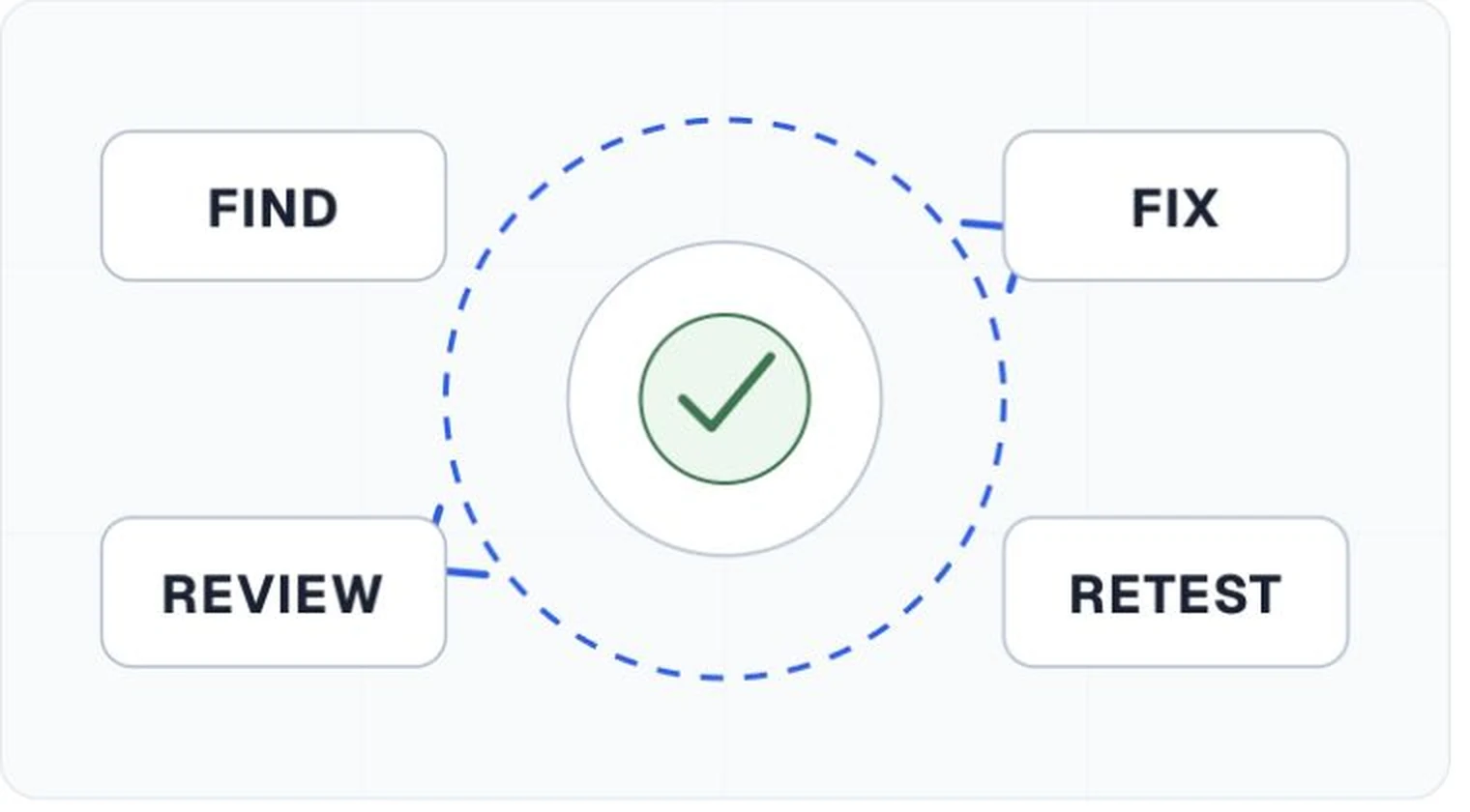
Repair structure before polishing metadata
Work through the tag tree, content order, headings, lists, figures, tables, notes, links, and form controls. Mark decorative page furniture as artifacts. Add document language, title, and display settings, but do not let those quick fixes disguise unresolved reading order or table relationships.
Run quality control in the reading tools people use
Inspect the repaired tag tree and move through the document with a keyboard and screen reader. Confirm that the page and structure stay aligned. Read image alternatives in context, navigate tables, activate links, and complete forms. A validator can support this review, but it cannot judge whether the document makes sense.
Retest a new, identifiable file
Save the repaired PDF as a new version. Rerun the original automated checks, repeat the affected manual checks, and keep both results. A closed finding should point to the repair and the evidence that verified it. Any accepted limitation needs an owner and rationale rather than a hidden status change.