What PDF/UA is for
PDF/UA is the ISO 14289 family of standards for accessible PDF. It defines how PDF objects and structure should be used so assistive technology can interpret document content. The standard addresses tags, semantics, alternative descriptions, fonts, navigation, annotations, forms, and other PDF-specific requirements.
What machine validation can establish
A conforming validator can inspect many requirements encoded in the file. It can identify missing or invalid structure, prohibited tag use, absent required properties, annotation problems, and inconsistencies between content and the structure tree. Record the validator and version because rule coverage and implementation can change.
What the validator cannot decide
A valid structure does not guarantee that its content communicates well. The validator cannot decide whether alternative text expresses an image's purpose, whether headings describe sections, whether a table remains understandable, or whether the reading sequence supports comprehension. Those checks require the document and its context.
How PDF/UA and WCAG relate
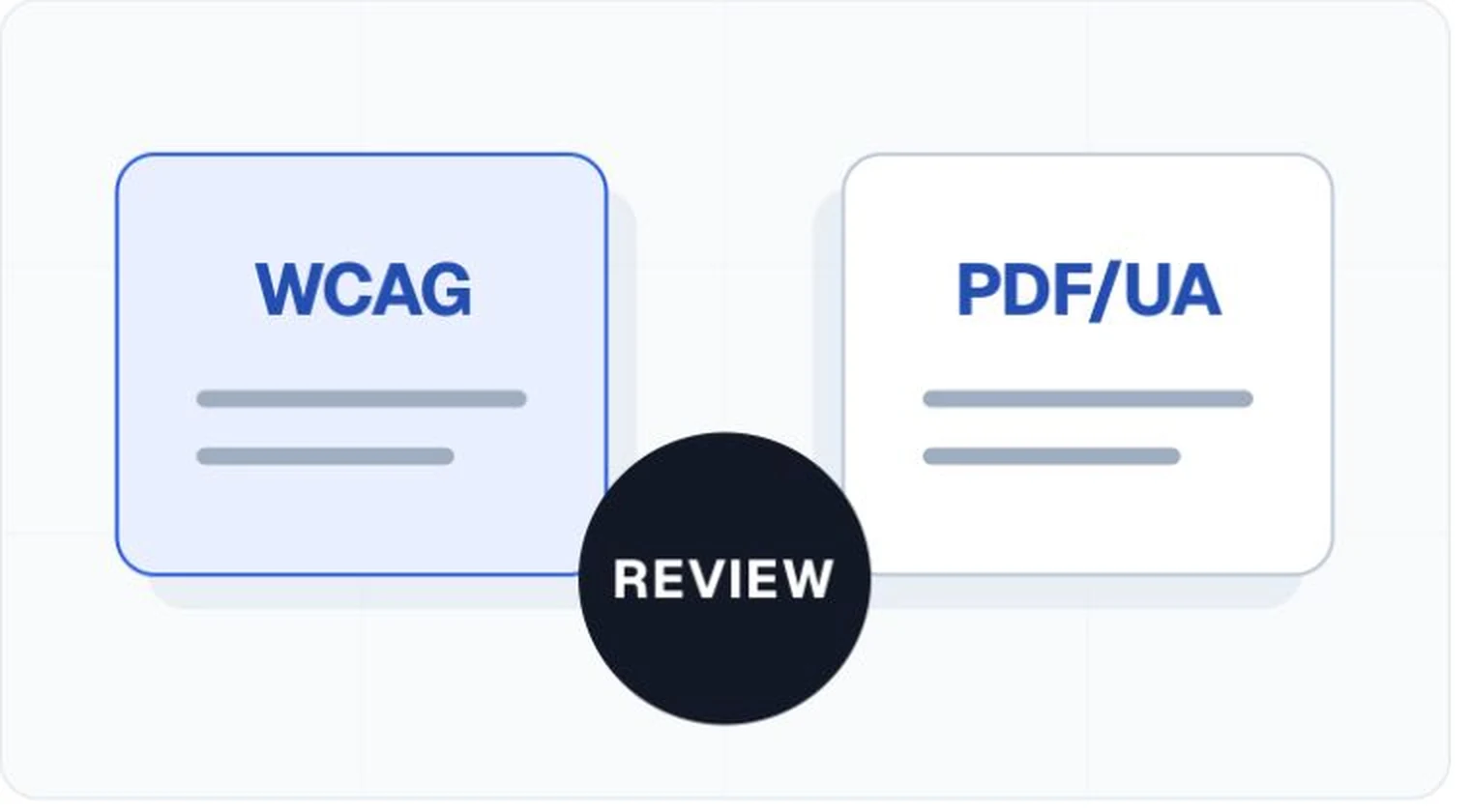
The standards answer different questions. WCAG defines accessibility outcomes across technologies. PDF/UA specifies accessible use of PDF. Teams often use both: PDF/UA for file-level interoperability and WCAG for broader content and interaction outcomes. State each target separately in a report.
What a useful claim contains
A useful result names the PDF/UA part and edition, the exact file, the validator and version, unresolved failures, and completed human checks. A logo or a bare “passed” label omits the evidence a reviewer needs to reproduce the result.